Your website is often the first impression potential customers have of your business. For Dubai SMBs, inconsistent branding across your online presence can erode trust before you even get a chance to showcase your products or services. When your color palette shifts from page to page, your messaging feels disjointed, or your site fails to respect local cultural norms, customers question your professionalism. This guide walks you through building a cohesive, culturally aware website brand that resonates with Dubai’s diverse market. You’ll learn how to define your brand identity, create bilingual style guides, execute consistent UX, and verify your branding stays effective over time. Let’s transform your online presence into a trust-building asset.
Table of Contents
- Key takeaways
- Understanding the foundations of website branding for Dubai SMBs
- Preparing your brand style guide: bilingual and culturally aware branding
- Executing website branding with UX, consistency, and local online trust factors
- Verifying and evolving your website branding over time
- Enhance your website branding with DubaiWebCity’s expert services
- Frequently asked questions
Key Takeaways
| Point | Details |
|---|---|
| Visual consistency | Establish a limited color palette and consistent typography across all pages to reinforce trust. |
| Define brand identity | Clarify your unique value, audience, and tone so every asset aligns with a single core message. |
| Bilingual brand guidelines | Create a comprehensive guide that works in both languages and respects local cultural norms. |
| Consistent UX | Design mobile first, optimize load times, and provide intuitive navigation to support branding. |
| Security signals build trust | Implement SSL certificates and visible trust badges to reassure visitors that their data is protected. |
Understanding the foundations of website branding for Dubai SMBs
Website branding goes far beyond slapping your logo on a homepage. It’s the complete identity customers experience when they interact with your digital presence. For Dubai SMBs competing in a market where customers have endless options, getting these foundations right determines whether visitors become loyal customers or bounce to competitors.
Start by defining your unique selling proposition and core brand values. What makes your business different from the dozens of similar companies in Dubai? Your brand identity should answer this question instantly. Are you the affordable option, the luxury choice, or the innovative disruptor? Once you’ve crystallized this, every other branding decision becomes easier.
Visual consistency creates the psychological foundation for trust. Choose a limited color palette of two to three primary colors and stick to them religiously across every page. Select one or two complementary fonts for headings and body text. Your imagery should follow a consistent style, whether that’s professional photography, illustrations, or a specific filter treatment. Creating brand guidelines for Dubai businesses requires defining these visual elements precisely so they remain consistent across all touchpoints.
Your brand voice shapes how customers perceive your personality. Are you formal and authoritative, or friendly and approachable? This voice must remain consistent in every piece of copy, from homepage headlines to product descriptions. For Dubai businesses serving both local and international clients, striking the right tone that respects cultural norms while remaining authentic is essential.
User experience directly impacts brand perception. A mobile-first design ensures your site works flawlessly on smartphones, where most Dubai residents browse. Load times under two seconds prevent frustration that damages your brand before customers even see your content. Simple, intuitive navigation tells visitors you respect their time. These technical elements aren’t separate from branding; they are branding.
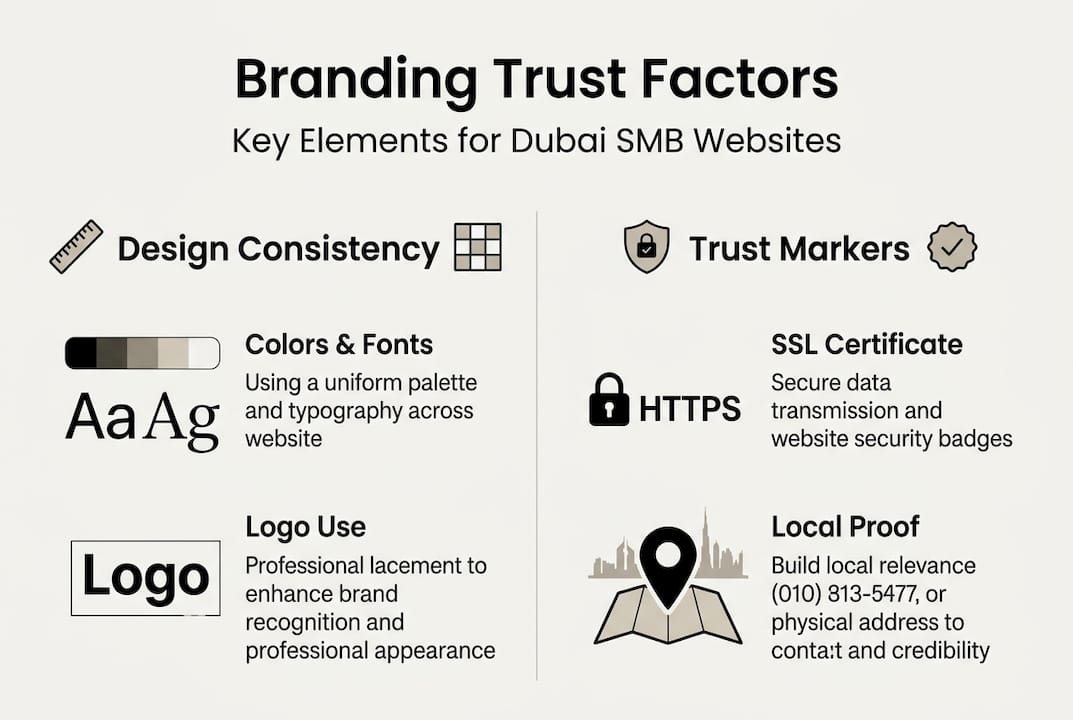
Security builds the foundation of digital trust. Implementing SSL certificates and displaying trust badges reassures visitors their data is protected. In Dubai’s competitive market, customers increasingly prioritize businesses that take security seriously. Your cheap website design services UAE should never compromise on these security fundamentals, regardless of budget constraints.
Pro Tip: Create a simple one-page brand summary with your color codes, font names, logo variations, and three key messaging points. Share it with everyone who touches your website, from developers to content writers. This prevents branding drift before it starts.
Preparing your brand style guide: bilingual and culturally aware branding
Dubai’s multilingual market demands more than translating your English content into Arabic. You need a comprehensive brand style guide that works seamlessly in both languages while respecting the cultural nuances that influence buying decisions in the UAE.
Start by creating parallel Arabic and English versions of your brand guide. This isn’t just about translation; it requires RTL layout compatibility that ensures your design works when text flows right to left. Your visual hierarchy might need adjustment because Arabic text has different spacing and flow characteristics than English. Test every page in both languages to catch layout breaks early.
Cultural sensitivity goes beyond language. Generic stock photos of Western models might alienate local customers who want to see themselves reflected in your brand. Include imagery that represents Dubai’s diverse population authentically. Respect local customs in your visual choices, avoiding anything that could be perceived as inappropriate or culturally insensitive. This attention to detail signals that you understand and value your local market.

Transcreation transforms your brand messaging for cultural context rather than just swapping words. A tagline that works brilliantly in English might fall flat or even offend when literally translated to Arabic. Work with native speakers who understand both the language and local business culture. They’ll help you maintain your brand’s emotional impact across languages.
Your style guide should include practical examples and mockups showing how branding applies in real scenarios. Show correct and incorrect uses of your logo. Display color combinations that work and ones to avoid. Include sample social media posts, email headers, and website sections. These concrete examples prevent misinterpretation and make it easy for team members to apply guidelines correctly.
Plan for regular yearly reviews of your brand guide. Dubai’s market evolves rapidly, and what resonated with customers last year might feel outdated today. Your business website essentials Dubai SMBs should include a process for keeping branding current without losing the consistency that builds recognition.
Pro Tip: Create a digital brand asset library with approved images, logo files, and templates. Store it in a shared location where your team can access current assets instantly. This prevents the common problem of team members using outdated logos or off-brand materials simply because they couldn’t find the right files.
Executing website branding with UX, consistency, and local online trust factors
Knowing what to do is one thing. Executing it consistently across your entire digital presence requires systematic processes and attention to detail that separates amateur websites from professional ones.
Maintaining visual and messaging consistency starts with a checklist. Before publishing any new page or content, verify it uses approved colors, fonts, and imagery. Check that the tone matches your brand voice guidelines. Ensure calls to action follow your established patterns. This systematic approach prevents the gradual brand drift that happens when team members make small deviations that accumulate over time.
Optimizing load times and mobile usability directly impacts how customers perceive your brand. A slow website signals carelessness or outdated technology. Compress images without sacrificing quality. Minimize code bloat. Test your site on actual mobile devices, not just desktop browser simulators. These technical optimizations tell customers you’re professional and detail oriented.
Brand consistency separates successful brands from forgettable ones. Research shows only 30% of brands follow their guidelines rigorously, yet inconsistency erodes trust faster than almost any other factor. When customers see different versions of your logo or conflicting messages across channels, they question whether you’re reliable enough to do business with.
| Trust factor | Physical business | Online business |
|---|---|---|
| First impression | Storefront appearance, location | Website design, load speed |
| Credibility signals | Business license display, clean space | SSL certificate, professional design |
| Social proof | Busy store, customer interactions | Reviews, testimonials, case studies |
| Cultural fit | Staff language skills, local customs | Bilingual content, culturally relevant imagery |
This comparison reveals how online trust factors mirror physical ones but require different execution. Your website must work harder to establish credibility because customers can’t walk in and evaluate your business directly.
Leverage local trust signals strategically. Display testimonials from Dubai-based clients prominently. Showcase any local awards or certifications. Optimize for local SEO so you appear in searches for Dubai-specific queries. Include your physical address and local phone number, even if most business happens online. These elements reassure customers you’re a legitimate local business, not a fly-by-night operation.
Avoid common mistakes that undermine branding efforts. The biggest error is treating your brand as static. Markets evolve, customer preferences shift, and competitors innovate. Your brand must evolve while maintaining core consistency. Another frequent mistake is inconsistent representation across channels. Your website, social media, and email marketing should feel like they come from the same company. When each channel has a different personality, customers get confused about who you really are.
Your design website drives Dubai business success when it balances consistency with evolution. The framework stays stable while specific expressions adapt to new platforms and customer expectations.
Pro Tip: Set up a monthly brand audit where you review a sample of your digital touchpoints. Check five random website pages, three social media posts, and two recent emails. Look for any deviations from your brand guidelines. This regular check catches problems before they become patterns.
Verifying and evolving your website branding over time
Building strong website branding isn’t a one-time project. It requires ongoing verification and strategic evolution to remain effective as your business grows and market conditions change.
Plan regular brand audits every 12 to 18 months to assess how well your branding performs. These audits should evaluate visual consistency across all platforms, measure customer recognition and perception, review competitor positioning, and assess cultural relevance for Dubai’s evolving demographics. Document findings and create action plans for any gaps discovered.
Training your team on brand guidelines and cultural nuances prevents the gradual erosion that happens when people don’t understand why guidelines matter. New team members need comprehensive onboarding on your brand. Existing staff benefit from annual refreshers, especially when guidelines update. Include real examples of both correct and incorrect applications so people understand the practical impact of following guidelines.
Track performance indicators that reveal branding effectiveness. Monitor social media consistency by reviewing whether your posts maintain brand voice and visual standards. Measure customer recognition through surveys asking if people can identify your brand from visual elements alone. Track conversion rate changes after branding updates to see if improvements actually drive business results. Sales uplift following brand consistency initiatives validates that your efforts matter.
Stay informed about regulatory changes affecting branding in Dubai. Trademark laws evolve, data privacy requirements shift, and advertising standards update. Your branding must comply with current regulations while maintaining effectiveness. Subscribe to updates from Dubai’s Department of Economic Development and consult legal experts when making significant brand changes.
The benefits of evolving your branding strategically are substantial. Maintained customer trust comes from consistency paired with relevance. Improved market positioning happens when you adapt to competitive changes without losing your identity. Enhanced customer loyalty develops when people see you’re both reliable and responsive to their changing needs. Your business website launch steps Dubai should include plans for ongoing brand management, not just initial creation.
Document every brand evolution carefully. When you update colors, fonts, or messaging, record why you made changes and what you expect to achieve. This historical record helps future team members understand your brand’s journey and prevents accidental regression to outdated approaches.
Balance stability with adaptability. Your core brand elements like logo, primary colors, and fundamental positioning should remain stable for years. Surface expressions like photography style, secondary design elements, and specific messaging can evolve more frequently to stay current. This approach gives you consistency’s benefits while avoiding the stagnation that makes brands feel outdated.
Enhance your website branding with DubaiWebCity’s expert services
Building a cohesive, culturally sensitive website brand requires expertise that most Dubai SMBs don’t have in-house. DubaiWebCity specializes in creating bilingual, mobile-first websites that establish trust from the first click. With over 20 years of experience serving Dubai businesses, we understand the unique challenges of balancing international appeal with local cultural sensitivity.
Our team handles every aspect of website branding, from defining your visual identity to implementing technical security that builds customer confidence. We create creative web design ideas that reflect your unique value while following proven UX principles. Our responsive website Dubai solutions ensure your brand looks perfect on every device. We integrate local SEO strategies that help Dubai customers find you when they’re ready to buy. Our UI UX design agency Dubai approach combines aesthetic excellence with conversion optimization, so your beautiful brand also drives business results. Let us transform your online presence into a trust-building asset that sets you apart in Dubai’s competitive market.
Frequently asked questions
What is website branding and why does it matter for Dubai SMBs?
Website branding is the complete identity customers experience when visiting your site, including visual design, messaging tone, user experience, and technical reliability. For Dubai SMBs, strong website branding builds trust in a competitive market where customers have countless options and limited patience for unprofessional experiences.
How does bilingual branding improve my reach in Dubai?
Bilingual Arabic and English branding allows you to connect with both local Emirati customers and the large expat population in Dubai. It demonstrates cultural respect and inclusivity, significantly expanding your potential customer base beyond what English-only branding achieves.
What are the most important trust factors for Dubai business websites?
SSL security certificates, fast load times under two seconds, mobile-responsive design, customer testimonials from local clients, and culturally appropriate imagery are the top trust factors. These elements signal professionalism and reliability to Dubai customers evaluating whether to do business with you.
How often should I update my website branding?
Conduct comprehensive brand audits every 12 to 18 months to assess effectiveness and relevance. Your core elements like logo and primary colors should remain stable for years, but surface expressions like photography style and specific messaging can evolve annually to stay current with market trends.
Can inconsistent branding really hurt my business?
Yes, significantly. Research shows inconsistency erodes trust faster than almost any other factor, with only 30% of brands maintaining rigorous guideline adherence. When customers see conflicting visual elements or messaging across your digital presence, they question your reliability and professionalism, directly impacting conversion rates and customer loyalty.